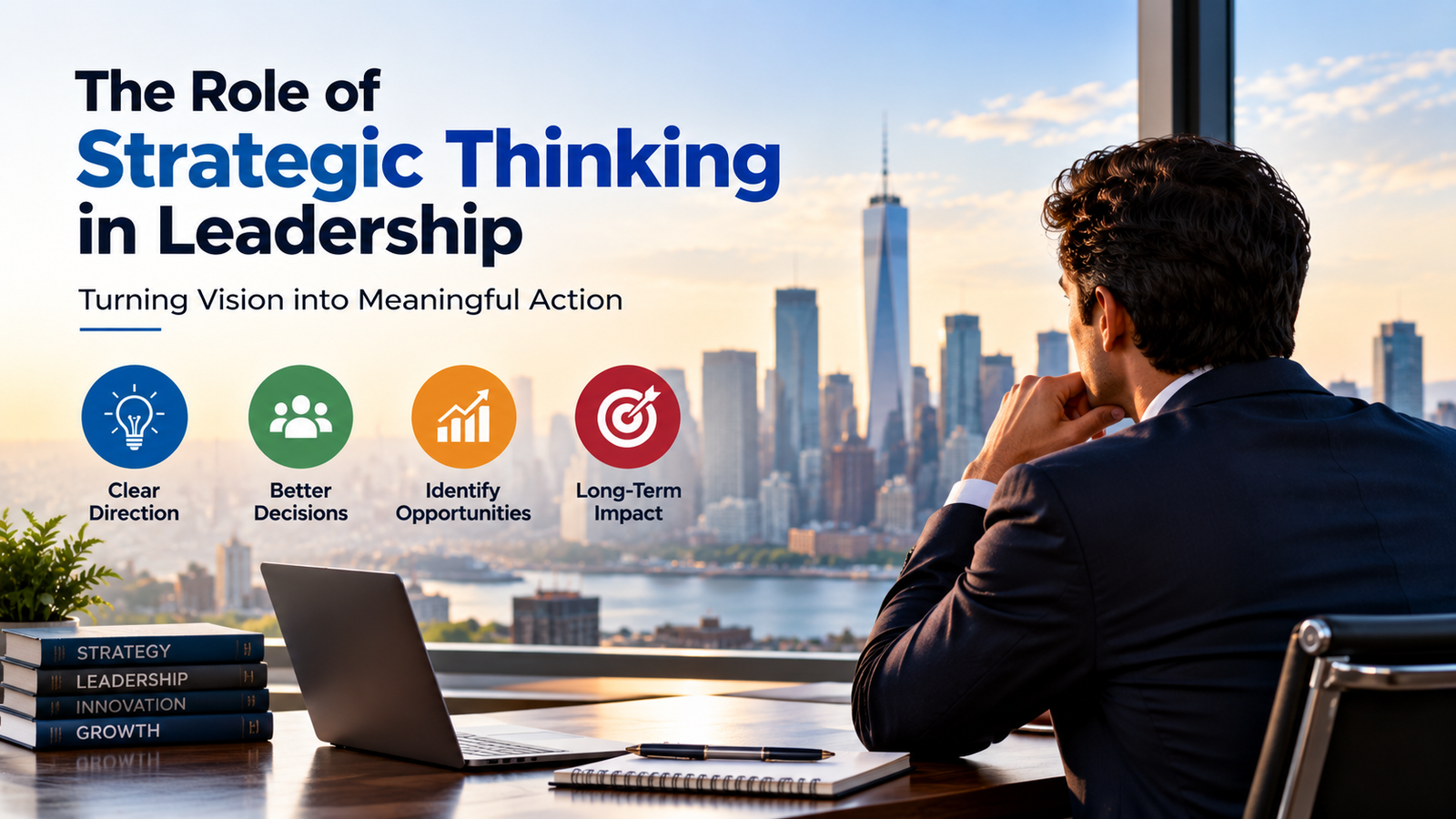
The Role of Strategic Thinking in Leadership
Strategic thinking plays an important role in effective leadership. It helps leaders look beyond immediate tasks, understand changing circumstances, evaluate opportunities, and make decisions with a longer-term perspective.
Leadership is not only about responding to what is happening today. It also involves thinking about where a team or organization needs to go next and what steps can help move toward that direction.
Creating Clear Direction
Strategic thinking starts with clarity. Leaders need to understand priorities, define meaningful goals, and communicate a clear direction. When people understand the bigger picture, individual decisions can become more focused and consistent.
Making Better Decisions
Good decisions require more than reacting quickly. Strategic thinking encourages leaders to consider available information, potential risks, opportunities, and the possible long-term effects of different choices.
Recognizing Opportunities
Changing environments can create new opportunities. A strategic approach helps leaders remain open to new ideas, recognize emerging possibilities, and adapt when circumstances require a different direction.
Thinking Beyond the Short Term
Sustainable progress usually requires patience and consistency. Strategic leadership considers both immediate priorities and longer-term objectives, helping connect today’s actions with future goals.
Turning Strategy Into Action
A strategy becomes valuable when it can be translated into practical action. Clear priorities, effective communication, collaboration, and regular evaluation can help turn strategic ideas into measurable progress.
Strategic thinking therefore gives leadership a broader perspective. It connects vision with decisions, opportunities with action, and short-term priorities with long-term progress.